

In the run up to last week’s debate, citizen’s groups delivered 160,000 signatures to PBS’s Jim Lehrer, asking that he bring up climate change as an issue for the candidates. PBS said this was the largest number of requests they had ever received of this type.
Of course, as we know, Jim Lehrer, the media, and the candidates continue to ignore the defining issue of the century, beyond Mitt Romney’s enthusiastic affirmation “I like Coal”.
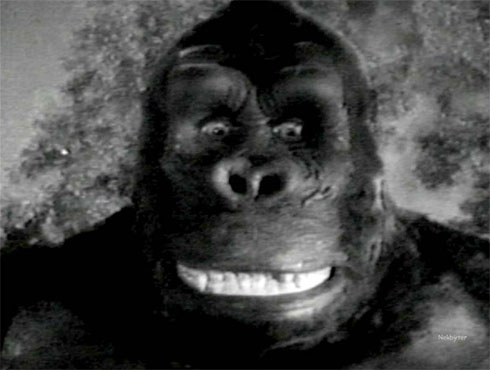
Still, there it sits, calmly licking its chops.
In a famous psychology experiment, participants watching a video of people passing a basketball around while moving missed a remarkable sight: Midway through the video, someone wearing a gorilla suit strolls through the exercise, pauses to beat his chest, and moves on. The key was that participants were asked to count the number of passes made by players wearing white shirts, and the focus on one activity induced a kind of blindness to the extraordinary visitor.
Would you see the gorilla?
Almost everyone has the intuition that the answer is “yes, of course I would.” How could something so obvious go completely unnoticed? But when we did this experiment at Harvard University several years ago, we found that half of the people who watched the video and counted the passes missed the gorilla.
It was as though the gorilla was invisible.
Climate change has become a sleeper issue in a number of Senate races as Democrats attempt to paint their opponents as extreme, based on their views on the issue.
It’s a largely straightforward peg for an attack that some Democrats hope will appeal to centrist voters that may be swayed if they see the Republican candidate as part of the party’s extreme.
In the Maine and Nebraska Senate races, the independent and Democratic candidates, respectively, have focused in on their opponents’ position, that man has little to no role in climate change, to argue that they are too far outside of the mainstream for voters in their states.
In Maine, independent Senate candidate Angus King recently launched an ad featuring him telling the camera that Republican opponent “Charlie [Summers] … doubts climate change science, favors taxpayer subsidies for big oil, and thinks Washington isn’t broken.”
Summers said at one of the candidates’ debates, which was focused solely on energy and the environment, that he doesn’t believe that climate change is caused primarily by humans, and cited other factors — like volcanic eruptions — that he believes affect the environment. It’s a position that King spokeswoman Crystal Canney said offered a contrast between the two candidates, and one that she believes Maine voters — who live in a state with a strong green energy sector and leans Democratic — will consider in November.
“I think when someone makes a statement that climate change is caused by volcanoes, I think you have to alert the public,” to what they believe, she said.
Summers’ campaign did not respond to requests for comment.


