One adaptation being explored, solar panels to shade pastures and animals. Sheep famously are taking advantage of this, Cattle are harder because they’re larger, but a project in Tennessee is exploring different approaches.
This small solar farm in Christiana, Tennessee, looks like many others from a distance – but beneath its black panels lies lush pasture instead of gravel.
The 40-acre facility, owned by Silicon Ranch, allows a small herd of cattle to spend their days munching grass and resting in the shade.
The ranch is testing whether cattle can coexist with power generation without removing farmland from active use, with a setup that introduces a variation of agrivoltaics, which extends beyond crops and sheep into larger livestock systems.
If you are reading this post, you are using a Data Center somewhere. If you are asking people to join your Facebook page, sign up for your Zoom, and contribute to your GoFundMe to oppose Data Centers, you may be unclear on the concept.
If you block a data center in one town, another will be built in another town nearby, or in the next state, or in Tierra del Fuego, or under the Ocean, or in Outer space – because you and billions of people like you, as well as, increasingly, any business that wants to stay competitive, are using and demanding them.
Everyone should be deeply concerned about the uses and misuse of AI technology, and every industrial facility should be held to rigorous economic and environmental standards. But I am disgusted by politicians on all sides who seek to enflame people’s often misinformed and untethered anger toward billionaire oligarchs, and legit fears about the technology, without actually educating them and leading a way forward. There are bad faith actors out there who seek to equate Data Centers with Clean energy, and are looking for ways to mobilize justified concerns about AI as a cudgel for the fossil fuel industry. I’ll be pushing back.
I empathize with the environmental opposition to data center construction, but the arguments are shakier than they seem. The battle over where A.I. data centers are being built is really a battle over what role A.I. should play in our lives. And that’s a battle that critics can win.
Many people feel that A.I. is being foisted on them by a handful of tech billionaires, in ways that are incorporeal and difficult to resist. Data centers, on the other hand, are physical structures that are subject to zoning regulations. So it makes sense that anger toward and anxiety about A.I. are manifesting as opposition to the buildings that house it. Regular people can’t tell Sam Altman what to do, but they can kick him out of their towns.
Data centers should be held to the same environmental standards as any other project. However, according to the researcher Andy Masley, giving up a lifetime of interacting with large language models would make a negligible difference in emissions compared with avoiding one trans-Atlantic flight or switching to a hybrid car. By his estimates, sending a prompt to ChatGPT is about as carbon-intensive as running a clothes dryer for a single second.
Hungary’s Paks nuclear power plant is facing a possible historic shutdown as record-low water levels on the Danube threaten its cooling system. Prime Minister Peter Magyar said the facility, which supplies nearly half of Hungary’s electricity, could be forced offline if river levels continue to decline. The plant has already reduced output to less than half capacity amid a severe summer heatwave and drought. Magyar also warned of wider energy supply pressures, including fuel disruptions and logistical problems, while accusing former Prime Minister Viktor Orbán’s government of failing to prepare for climate-related challenges. The crisis has intensified debate over Hungary’s energy security, climate resilience and reliance on Russian-linked energy infrastructure.
Hungary will power down its Paks nuclear power plant for the first time in nearly half a century on Sunday, Prime Minister Peter Magyar said on Saturday, as water levels on the Danube River the plant uses as a coolant have plumbed record lows.
The shutdown comes as large parts of Europe have been hit by prolonged heat and drought, driving river levels lower and raising concerns about water supplies, shipping and power generation.
Falls in water levels amid a lack of rain have also disrupted shipping and tourism in Hungary and triggered water-use restrictions in more than 100 cities and villages, including on the outskirts of Budapest, based on government records.
The energy crisis could also hit the wider economy, which grew less than forecast in the second quarter following a three-year stretch of stagnation.
“Due to a further decline in the Danube’s water level, the second-to-last generating unit at the Paks nuclear power plant will be shut down at 1:30 a.m. (2330 GMT),” Magyar said in a Facebook post.
Tragedy unfolding quickly in Spokane, Washington area. National Weather Service has declared a “Particularly Dangerous Situation.”
Follow Daniel Swain to get the most informed analysis.
A dangerous wind shift (visible on radar imagery) has just occurred in #Spokane, WA, where major wildfire disaster is currently unfolding. Three separate major fires (circled) near or within city limits have already caused major structure loss & chaotic, expanding evacs. #WAwxpic.twitter.com/QwNB40qvth
There are three larger and fast-moving fires in and around the city, with the biggest threat coming from the Old Trails Fire. That fire started on Saturday afternoon local time and had burned over 3,500 acres by early Sunday morning, according to the Watch Duty app. Swaths of Spokane are under Level 3 evacuation orders, which read: “Leave NOW! This may be your only notice.”
Late Saturday night, the Washington National Guard was mobilized to assist local first responders. “The Washington National Guard is making 30 members available tonight to Spokane authorities for any emerging needs,” it said in a Facebook post.Late Saturday night, the Washington National Guard was mobilized to assist local first responders. “The Washington National Guard is making 30 members available tonight to Spokane authorities for any emerging needs,” it said in a Facebook post.
Volleyball friends on the way out of the evacuation zone in Spokane on W Strong, after evacuating from Spike and Dig but then being trapped at the Indian Trail Safeway #OldTrailsFire#WAWildfirepic.twitter.com/fBGmRbktYD
Everyone knows the frustration of bad sleep on a hot night, tossing and turning in the sheets as the hours slip away.
That experience is becoming more common thanks to climate change, according to a new study from the research organization Climate Central. The analysis finds that on average, people around the world lose about 56 hours, or seven full nights of sleep each year to uncomfortably warm temperatures. About 10% of that lost sleep—roughly 5 hours—can be pinned to human-driven climate change.
“Summertime is hot. It’s always been,” says Kristina Dahl, the lead scientist at Climate Central. “But climate change is making them hotter, and making nights hotter. So it’s really amplifying the sleep loss that would happen naturally.”
Temperatures soared in the Western U.S. on July 12, 2026, as shown in this map of modeled air temperatures from the GEOS (Goddard Earth Observing System). Numerous weather stations in Montana, Utah, and Wyoming recorded their highest temperatures since record-keeping began. NASA Earth Observatory/Michala Garrison
The combination of ambient temperatures nearing the upper 90s and high relative humidity creates a dangerous threshold for farm animals. Unlike humans, cattle and pigs cannot sweat efficiently to dissipate heat, relying instead on heavy respiration and panting.
When the Temperature-Humidity Index (THI) reaches extreme levels, animals cross into a state of acute heat stress. For beef and dairy producers, the consequences are immediate and long-lasting:
Production Drops: Overheating forces cattle to reduce their feed intake to limit internal metabolic heat production, resulting in immediate drops in milk yields for dairy operations and slower weight gain for feedlot beef cattle.
Fertility Risks: Prolonged multi-day heatwaves drastically reduce conception rates in breeding herds, often causing early embryonic death that goes unnoticed until autumn pregnancy checks.
Mortality Hazards: Heavy cattle nearing market weight and young calves are particularly vulnerable.Without continuous airflow from industrial fans and access to clean, cooled water, body temperatures can easily exceed a cow’s normal threshold of 102 degrees Fahrenheit, leading to respiratory failure.
Veterinary extensions are urging producers to suspend all non-essential herd handling, sorting, or livestock transportation until the heat dome shows signs of fracturing.
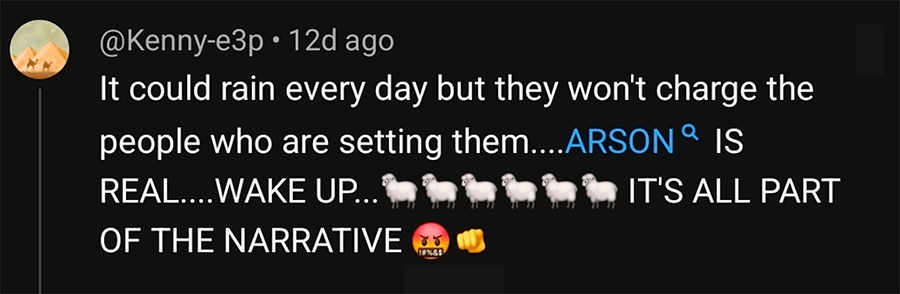
Really great, sober, much needed, fact based explainer on Canadian wildfires, focusing on data, and addressing the most common “wake up, sheeple” internet memes.
The creator has a good background and experience for the task.
Kyle Brittain is an Alberta-based weather specialist with a passion for forecasting, documenting, and reporting on severe weather events.
Having worked as a weather professional for many years in both the private and public sector, his work as a video journalist has appeared on various networks in North America and beyond, including CBC, The Weather Network, Global, CTV, APTN, NFB, CNN, NHK, Sky News, the Tonight Show, and more.
Kyle has also spent several summers working as a wildland firefighter on a rapattack crew in northern Alberta, and has braved the elements working in high-angle rope access in Calgary and as a glacier guide in New Zealand.