

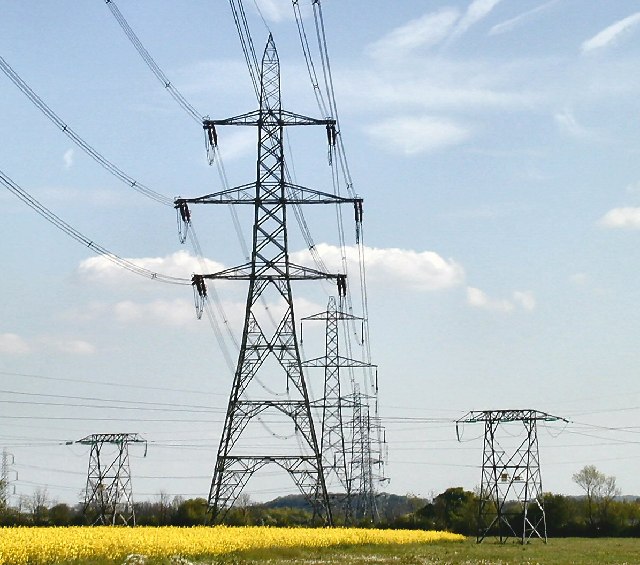
When eagles or other large raptors sit on transformers and the cross-arms of utility poles, their wings can touch adjacent wires or conductors, completing a circuit and causing electrocution. Raccoons, possums, squirrels and other animals can also be electrocuted, as can smaller birds who sit on wires or poles.
Eagles and migratory birds are protected by federal law, and utilities can be prosecuted and fined for causing deaths. Enforcement of the law that protects eagles is being stepped up against wind power operators.
U.S. Fish and Wildlife Service (FWS) spokesperson Laury Parramore said she believes a 2009 case was the last prosecution of a utility under bird protection laws.
There, the utility PacifiCorp pleaded guilty in federal court to violating the Migratory Bird Protection Treaty related to the deaths of 232 eagles on its electric infrastructure in two years in Wyoming, deaths the FWS said could have been prevented with readily available measures. The utility was ordered to pay $1.41 million in fines and restitution and to spend $9.1 million making its system safer for birds.
“The Service’s preferred approach is to work with industry on voluntary compliance,” said Parramore. “Prosecutions occur when companies refuse to cooperate and comply with laws protecting eagles.”
‘Avian safe’
The FWS says that the first documented eagle electrocution from a power line happened in 1922. The service has for several decades been pushing companies to prevent electrocutions. In 1989 the FWS formalized the Avian Power Line Interaction Committee (APLIC), a partnership with the National Audubon Society and investor-owned utilities and universities, that drafts and publishes best practices for protecting birds from power infrastructure.
An academic paper endorsed by the FWS said that collisions with power lines and transmission towers kill hundreds of thousands to 175 million birds annually, while tens to hundreds of thousands of birds are electrocuted annually. The paper noted there is not comprehensive monitoring of the issue, so mortality estimates are rough.
In western states, electrocution has particularly been a problem for protected eagles. A Bureau of Land Management report on raptor conservation in western states cited studies showing electrocution among the top four human-related causes of raptor death.
The solutions are fairly simple but time-consuming and expensive, given the scale of the infrastructure in question.
Ameren Illinois is in the process of putting special plastic covers on its utility poles. A pole typically has three arms. By covering just the center one with weather resistant, non-conductive plastic, a raptor can perch anywhere on the pole without being electrocuted, Adams explained. It can perch on the cover or on one of the uncovered arms safely; as long as it doesn’t touch two uncovered conductive spots at once.
“They can do anything they want and do it safely,” once a cover is installed, Adams said.
Based on confidential federal surveys of raptor nests, Ameren has prioritized poles within a certain distance of nests. A cover is also installed anywhere a raptor has been killed.
So far about 1,400 covers have been installed. Meanwhile, new utility poles are built with arms farther apart than an eagle’s wing span so there is little risk of electrocution.
The covers also reduce the chance of animals and smaller birds being electrocuted. Additionally, reflectors are being placed on power lines to help prevent swans and other migrating birds from flying into the lines and getting entangled and electrocuted.
“Now everything new we construct is 100 percent avian safe,” said Adams. “There are hundreds of thousands (of poles) out there, so it takes a lot of time to do this. Someday our entire system will be avian safe.”
Adams said that before the protection program was launched in 2010, the utility would log 100 to 150 raptor deaths each year. Now the fatality rate is only about one-tenth that number, he said. It is difficult to compare annual statistics since raptor populations can fluctuate greatly, but he said the reduction is significant.
Raptors also like to build their nests on utility poles. The nests often cause the wood to rot more quickly, so that it collapses and causes outages.
Under federal law the inhabited nest of a protected raptor can’t be disturbed. That means there is little the utility can do when a large nest causes outages or other problems. Raptors are likely to return to the same spot to build a nest in successive years, so Adams explained that the utility sometimes builds dummy utility poles with a convenient “nest box” near the previously inhabited pole, hoping the raptor will rebuild its nest there. Unoccupied nests might also be moved to the dummy pole.
Ameren is also working with two state raptor recovery organizations to treat raptors that are injured on electricity infrastructure or otherwise. It is against the law to touch or move an injured or dead eagle or protected raptor, so all Ameren employees are trained on how to handle raptor deaths and how to contact federal FWS officials.
Adams noted that residents often call Ameren to report injured or dead raptors, even if the situation has nothing to do with electricity infrastructure, so the utility has become a de facto liaison with FWS and private raptor recovery groups.
‘It’s just simple things’
Jacques Nuzzo, program director of the Illinois Raptor Center, said collisions with automobiles, poisoning, and habitat destruction kill and injure more raptors than electric infrastructure. But Ameren’s efforts have both concrete and symbolic significance, Nuzzo said.
A lesser-known way to help is to use HVDC lines instead of AC lines. A two-circuit, 3-phase AC transmission line has 6 conductors (like the picture); a 2-circuit HVDC transmission line has two. Fewer conductors is not only cheaper and less visually obtrusive, it has fewer obstacles to fly into and fewer opportunities for birds to bridge from line to line or line to ground.
This places bird deaths in perspective.
“From this review, it is apparent that the primary source of collision mortality among birds are not the spectacular, episodic events recorded at stuctures such as TV towers and power plant stacks, but are the small, incremental losses associated with the millions of kilometers of power and communication lines and the billions of glass win- dows throughout the country. Losses from the latter two sources are difficult to docu- ment because mortality at any one site is usually so small it goes unnoticed. However, windows and overhead wires, together with road-related losses (Banks 1979), may ac- count for hundreds of millions of bird deaths annually. Whether or not such mortality is of any biological significance remains to be determined, but in view of the deleterious ef- fects of pollution, habitat destruction, and other human related activities, the impacts of collision mortality cannot be ignored.”
http://digitalcommons.unl.edu/cgi/viewcontent.cgi?article=1001&context=icwdmbirdcontrol
What really places things in perspective is “….collisions with automobiles, poisoning, and habitat destruction kill and injure more raptors than electric infrastructure”. For smaller birds, window and cats are the biggest causes of death. This whole thing is interesting but is really almost a non-issue in the greater scheme of things.
It’s only an issue because FF interests have twisted the energy source with the least number of bird deaths into a menace to birds to draw attention away from FF sorry record of ecological destruction. It probably started with a FF PR person who wanted to counter the bad odor of Exxon Valdez and the pictures of dead oily birds. It’s a twisted game.
Perhaps, but don’t think it will gain much traction with the public.
Its ironic that all other forms of generation (except hydro) produced more bird deaths and that constructing more wind to replace other generation would result in less bird deaths. I don’t even want to talk about the NIMBYs that just don’t want to know whats killing them(and I don’t mean birds). I have a low tolerance for willful stupidity.