

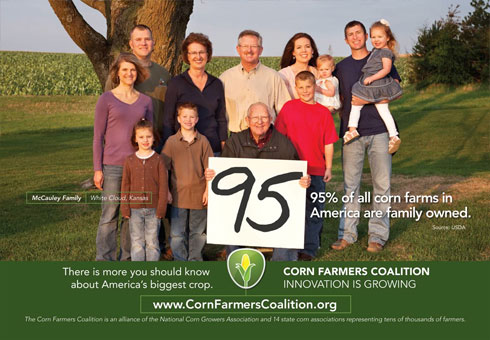
Additional corn crop failures are likely, due to too little rain and too much heat through the middle of August.
Spotty downpours will grace northern and eastern areas of the corn belt into August, but not enough rain will fall on a large part of the corn belt, leading to a disaster.
AccuWeather.com agricultural meteorologists feel that a lack of rain will continue to take its toll on non-irrigated corn in much of Nebraska and Kansas, as well as huge sections of Illinois, Missouri, Iowa, southeastern South Dakota, southwestern Minnesota, southwestern Michigan and southeastern Wisconsin.
In these areas, a few tenths of an inch of rain will fall here and there in the weeks ahead with some areas barely getting a drop.

Broiling heat blanketed much of the Midwest on Tuesday, exacerbating the region’s worst drought in more than 50 years and devastating corn, soy and other vital crops.
From Chicago to St. Louis to Omaha, Nebraska, temperatures eclipsed 100 degrees Fahrenheit and the National Weather Service (NWS) issued heat advisories across Midwest and mid-Atlantic states.
Many of the NWS heat advisories don’t expire until next week. Temperatures in Kansas City, Kansas for instance, are expected to hit 104 degrees Fahrenheit (40 degrees Celsius) on Wednesday.
The current drought is the worst since 1956, the National Oceanic and Atmospheric Administration said in a report posted on its website.
In Iowa, Gov. Terry Branstad convened a hearing to discuss the drought and its effect on the state’s pork industry, which relies heavily on corn feed.
“It’s important that we do all we can to help people through this difficult time,” Branstad told local radio station KILJ. “And obviously more rain would help.”
About 55 percent of the contiguous United States is in a drought, just as corn plants should be pollinating, a period when adequate moisture is crucial. The United States ships more than half of all world exports of corn, which is made into dozens of products, from starch and ethanol to livestock feed.
“We’re moving from a crisis to a horror story,” said Purdue University agronomist Tony Vyn. “I see an increasing number of fields that will produce zero grain.”

Zero grain.
UPDATE:
July 17 (Reuters) – U.S. corn production has shrunk 7 percent versus the government’s downgraded estimate a week ago, a Reuters poll found on Tuesday, with a worsening drought likely to cause more damage before the month is out. As the worst drought since 1956 begins to expand to the northern and western Midwest, areas that had previously been spared, analysts are slashing corn yield estimates by the hour.
It may be all over for the Heatland, er, Heartland. Here’s an omen that one just must pay attention to:
The Sage Of Omaha Fails Artificially Flavored Corn Syrup Soda Test. You can’t make this stuff up: http://tinyurl.com/75dknaj
As Omaha goes, so goes Cedar Falls….
Where you can still just about fry an egg on the sidewalk at this late hour: http://vortex.plymouth.edu/usheat.gif
***
Today’s lesson in Corn Agronomy:
Corn needs cool nighttime temperatures in order to grow. 65 degrees seems to be about ideal for corn growth. See: http://corn.agronomy.wisc.edu/WCM/W078.aspx
Recently, temperatures in the Corn Belt have been in the high 80s or above at night. This absolutely shuts the plant down as far as growth is concerned. So this year, instead of corn fields with tassels too high to reach, we’ve got stunted specimens with little hope of recovery now that we’re just about through the critical pollination period.
***
Recently, Oregon had the largest wildfire since the 19th Century. This occurred in cattle grazing lands. The repercussion is that dozens of Southeastern Oregon cattle operations are scrambling to relocate their herds. Good luck with that, boys, your entire region is in drought.
***
And finally this mop up of Ray’s “Ag” Report stories:
The drought is forcing ranchers to sell the herds early, because there is no grass and no silage to fatten them through the summer. Smaller ranchers will be losing the ranches, because this isn’t the first bad year:
http://www.nytimes.com/2012/07/16/us/heat-forces-ranchers-to-sell-herds-to-cut-losses.html?_r=3&hp
Mississippi river levels keep dropping, and fewer and fewer barges can navigate:
http://thinkprogress.org/climate/2012/07/16/520241/low-water-levels-on-the-mississippi-river-a-major-threat-to-commerce-this-is-absolutely-not-normal/
Grain prices keep going up and up, affecting those cattle herds, and about to have the same effect upon the most pressed members of the human herds. (What will global capitalists do? Will wars be instigated to kill off 2/3 of the people in Egypt, for instance? It’s a thorny question. That’s why sociopaths operate at that level. It doesn’t bother them. There now… Feel better?):
http://www.agrimoney.com/marketreport/evening-markets-weather-fears-give-grains-rally-fresh-legs–1700.html
***
Remember, there’s always a silver lining, the Wall Street commodity speculators are going to make a fortune on this disaster!
So, “Keep On The Sunny Side of Life”
Peter,
The soybeans do not look too flash. And apparently wheat areas are getting way too much rain? Have you heard anything about this?
Here’s an excellent radio show produced by our local NPR station:
onpoint.wbur.org/2012/07/17/severe-drought
Neil
Neil,
That was a fine program. So unlike the thin gruel and pabulum our Oregon Public Broadcasting has opted for in general in order to placate the mindless right wing and attempt to make milquetoast exciting.
I guess our “response” should be a good old-fashioned prayer rally. Where’s Governut Perry?
My Gov is out there doin’ battle with the evil forces of critical thinkin’ *
* And I think he’s winning…at least in Texas 🙁
Does anybody know, if this becomes the new norm in the coming decades, if it is going to push America’s growing zone (bread basket zone) northwards? And if so, how will the reduced sunlight in the north, affect the yield’s magnitude?
Apparently, during the Medieval Warm Period that the denialists are all exited about, America’s grain producing area suffered multiple, severe droughts – each lasting decades. There’s actually a place in Nebraska, where a thin strip of vegetation covers sand dunes that formed during that period.
Re: “Does anybody know, if this becomes the new norm in the coming decades, if it is going to push America’s growing zone (bread basket zone) northwards? And if so, how will the reduced sunlight in the north, affect the yield’s magnitude?”
The key to understanding our situation is to study soil types. Excluding California’s astonishingly fertile Central Valley, some of the best soil on the planet is in Iowa, in Central Illinois in a band near Moline and a few other pockets where conditions were historically favorable to soil development. Moving north, you’ll find that the Laurentide Glaciation makes much of the increasing latitudes from the heart of the heartland north somewhat deficient in soil tilth due to the scraping of the surface, creating thin soils. So, in simple terms, you can escape the heat, but you sacrifice soil quality as you head north.
Actually, during the growing season, sunlight is increased as you go to the higher latitudes. Think about June 21. If you are sitting on the Tropic of Cancer, say, in Cabo San Lucas enjoying a Mojito, you have a mere 12 hours of daylight in which to enjoy this fine drink. But if you are above the Arctic Circle, say at Tromso, Norway or Murmansk, Russia, you can get snockered on Stoly in 24 hours of glorious sunlight!
Nazdravia!
Here’s a graph of daily solar radiation density by date and latitude.
http://www.fao.org/DOCREP/003/X6541E/X6541E03.htm
Thanks! Great chart. Very informative page.
I know that it was a typo,but how I wish that the “denialists are all exited ” would come true 😉
Thanks Ray, skeptictmac, and Charles for the thoughtful replies, info and humor! I’ll have to sit down, this weekend and read that ‘Sun Power as an Energy Source’ chapter (or at least the parts that relate to my question).
I was thinking that the farther north one examines the earth, the less dense the radiation becomes for a given surface area, because the angle of the surface, with respect to the sun, becomes less and less. Plus the smaller that angle gets (i.e. the farther north one travels), the greater the amount of atmosphere which light has to travel through to get to the ground becomes, increasing the magnitude of diffusion, and reducing the magnitude of the light directly hitting the surface (and of course, my unpolished thoughts don’t take into account atmospheric density as a function of latitude).
But yeah, i didn’t even think about the increase in sun exposure time, regarding a northern crop versus a southern crop. Maybe, for a (theoretical) given temperature, and soil condition, the increase in exposure time would make up for the reduction in light density per m^2?; at least for the ‘lesser’ northern latitudes? I guess it’s more complex than just those two variables, as is evident as I scan over Charles’s link.
And then there is the question: Do agricultural crops even enjoy the longer amounts of sun exposure seen in the northern latitudes (assuming temps were hot enough to grow such, and the soil was of adequate nutrition)? But I suppose if the soil quality is not that great up there, then the question is less meaningful. That soil quality thing Ray mentioned sounds like there could be an uncomfortable limit on the amount of food that could be grown at a higher latitude that is warmer in the future.
Thanks for putting up with my speculative ramblin’!
An irony is that if this is as bad as it’s looking likely, President Obama will get the blame for the spike in food prices just before the elections.
And Obama can blame Republican commodity traders. And he’d be more accurate than the GOP’s lying pack of hyena PR personnel. Not that this matters to a dittohead!
I see that meme being picked up in the media, but I’m not sure I believe it.
This summer is a decisive hinge moment for the US populace in understanding climate change, one that they will not retreat from.
I hope and think you’re correct Peter. I’ve been following your blog for a few years now, wondering when – and if – the general public would ever pick up on the true story going on with climate change.
Big thanks for the hard work you put it.
You may be right. I have seen a few people change from ambivalent on climate change to outright angry, more so in some cases than a guy like me that follows the issue somewhat closely.
I think Obama is pretty used to being blamed for just about anything bad.
I’m shocked that the RightWingNutBars haven’t found a way to blame him for the attack on Pearl Harbor.
If Jesus stood as a candidate against the Republicans they’d label him a whinny, socialists liberal pacifist in favor of free health care (all that healing the sick) welfare handouts (feeding of 5,000) and committing class warfare (that easier than going thro the eye of a needle stuff).
They would of course accuse him of being a Roman in disguise and blame him for anything that went wrong, even if it wasn’t anything to do with him (such as the Romans putting up taxes).
I heard he was a muslim.
I heard he was a social revolutionary/radical. He probably didn’t even have a legitimate birth certificate, either.
Better start thinking of tasty ways to prepare jellyfish.
Let me help… Here’s a video about Jellyfish Burgers. Yum.
http://www.youtube.com/watch?v=myUoi_xWeiY
Daniel Pauly: Jellyfish Burgers or How We Changed the Oceans and They Changed Us
Description:
Published on Jun 28, 2012 by UCtelevision
(Visit: http://www.uctv.tv/) Marine biologist Daniel Pauly, University of British Columbia, warns that modern fishing practices, left unmanaged, will leave little but jellyfish and plankton in the sea for future generations to eat — a frightening vision of our oceans and our lives. Series: “Frontiers of Knowledge”
I’m waiting for a denier to show up and ask him if he things that the farmers about to loose their crop have a legitimate right to sue deniers for damages.
I mean if the meat industry could sue Oprah for just saying a few bad things about meat, surely the cereal farmers should be serving notice on the Heartland institute….now where’s that Dave “Halli” Burton when you need him!
Questions about the drought and corn ethanol are discussed in this brief video.
Published on Jul 18, 2012 by ConsumerEnergyReport
Robert Rapier discusses the impact the drought in the Midwest will have on ethanol prices and the politics surrounding the Renewable Fuel Standard (RFS).
This is just one of the early, more “subtle” effects of climate change…
Let’s ask Rex Tillerson how we’ll adapt to losing this much grain and livestock.
I’m sure he’s thought of a cost-effective engineering solution to not having food and has the deep pockets to pay for it. Exxon food bank?
Wait for a few decades, when the price of food will double: Then, getting a cheap and nutritious meal at a corporate cafeteria will start to look similar to presently relying on your employer for health insurance. I heard Apple feeds their headquarters staff like Roman emperors.
A few decades? That’s a very optimistic scenario unless we get cracking very soon. If things continue along the current trend, a few decades hence could find much of the world’s need for food looking like Judge Dredd or Soylent Green