Bloomberg: “Cheap” Coal is Dead

Climate Deniers can only say coal is cheap because they do not value our children’s futures, to say nothing of their brains, lungs, and sex organs.

But even if you leave human health and well being out of the equation, “cheap” coal is gone, and the coal industry is a dead man walking.

Bloomberg: 

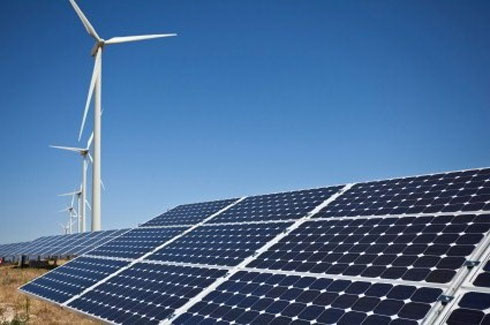
In March, the power generating arm of India’s largest conglomerate, the Tata Group, announced that it was shifting its investment strategy from coal-fired thermal plants to wind and solar renewable projects. Coal projects, Tata said, were becoming “impossible” to develop, and investment in them had stopped.

With this declaration, one of Asia’s biggest energy players confirmed an emerging reality. The U.S., Europe, Russia, Australia and Japan all had created modern consumer economies dependent on abundant, cheap fossil-fuel energy. In the 21st century that is no longer viable; the high-carbon growth path is closing.

The reason is cost. Oil has long been expensive, because low-cost oil producers such as Saudi Arabia have learned to demand high prices by limiting supplies and refusing to sign long-term price agreements. Coal had always been different — traded locally, on both long-term concessions and short-term spot contracts. Two years ago, China and India could supplement their domestic coal supplies with imports from Indonesia, Australia and South Africa. Some of the cheapest coal mines serving China in 2010 were in Indonesia, where India’s Adani Power Ltd. and Tata were purchasing coal mines and building their own shipping and port facilities to ensure they could supply a wave of huge new power projects.

Geologically Abundant

While coal is geologically more abundant than oil, cheap coal, close to population centers, is not. The biggest coal- producing region in the U.S. — the Powder River Basin — can get coal out of the ground for about $12 a ton. It costs roughly $60 a ton to ship it to power plants in the Ohio Valley. China’s vast reserves near Inner Mongolia can be mined for $25 a ton. But by the time it travels by rail across North China, then by sea to southern coastal cities, the cost rises to more than $125 a ton.

Breaking the Mainstreet Barrier: Popular Science Exposes the War on Climate Scientists

Deniers are royalty pissed about this. Popular Science gives the mainstream, barbershop-and-dentist-office-reading blessing to that there new-fangled global warming science.

Right in there with “The Food We’ll Eat on Mars”, and “How to Make your Own Home Drink Carbonation System”.

Popular Science:

Scientists who speak up quickly become targets. Both Milloy and his counterpart Marc Morano, who runs the site ClimateDepot.com and once declared that climate scientists “deserve to be publicly flogged,” occasionally publish the e-mail addresses of climate researchers, a stunt that can result in scientists receiving a flood of vitriolic messages. A few weeks before our meeting, Milloy had offered a $500 bounty for a video of anyone who would heckle Mann with “an alarmism-debunking” question during the California leg of his book tour. The hecklers never materialized but, as with the white powder in Mann’s letter (which the FBI determined to be cornstarch), the threat made an impact.

 –“Multiple feet of sea level rising in the next few decades, that’s just fantasy,” says Myron Ebell, the director of energy and global-warming policy at the Competitive Enterprise Institute, a free-market think tank. Ebell is in a taxi heading down K Street, Washington’s lobbyist row, talking to a reporter from the Naples Daily News in Florida. The journalist called to get his perspective on a new scientific study that warns of more frequent flooding along U.S. coastlines as higher temperatures accelerate rising sea levels. “The evidence is inconclusive,” Ebell says. “The [Antarctic] ice sheet is not shrinking but may in fact be expanding. The reality from the experts is . . . ”

Ebell does not claim to be a scientist. His background is in economics, and like Milloy, he was a member of the American Petroleum Institute task force in 1998. Yet his lack of scientific credentials has not deterred a stream of journalists from requesting his opinion of the newly released study. “Happens every time I get quoted in the New York Times,” he says. Ebell provides two things most scientists can’t: a skeptical view of climate science and clear, compelling sound bites ready for the evening news or the morning paper. For a deadline-pressured journalist covering “both sides” of a complex issue, Ebell might seem an ideal source. Yet by including unscientific opinions alongside scientific ones, that same journalist creates an illusion of equivalence that can tilt public opinion.

“It’s that false balance thing,” Mann says. “You’re a reporter and you understand there’s an overwhelming consensus that evidence supports a particular hypothesis—let’s say, the Earth is an oblate spheroid. But you’ve got to get a comment from a holdout at the Flat Earth Society. People see the story and think there’s a serious scientific debate about the shape of the Earth.”

On the taxi’s radio, a weatherman forecasts that tomorrow will be Washington’s hottest March 15 in recorded history. Ebell glances out the window at the cherry trees, in full bloom two weeks earlier than usual, as he thumbs down to his next call. “This one’s a producer at PBS NewsHour,” he says. “They’re interviewing one of those sea-level guys and they want to know how they should approach asking him a negative question.”

Ebell connects with the producer: “What they’re saying is, we’ve got to throw huge, scarce resources into what is essentially a nonproblem, that would be the point I’d make to him. The modelers will never admit that their models have no forecasting ability. They’re just saying that this could happen.” Then he winds up for his kicker. “Well, I’m sorry, a lot of things could happen. The Earth could be hit by an asteroid tomorrow.”

Continue reading “Breaking the Mainstreet Barrier: Popular Science Exposes the War on Climate Scientists”

The Climate Crocks Interview: Marc Morano – “That Middle Ground Where we can all Get Along”

One of the first instantly recognizable faces I ran across at the recent Heartland Institute Denia Palooza conference in Chicago was Marc Morano, widely known as one of the most visible personalities on the climate denial circuit.
He was gracious enough to accept my offer to be interviewed, and I quizzed him on his practice of posting climate scientist’s emails on his blog.
The question is all the more relevant this week, as the University of East Anglia recently released some of the threatening emails received by scientist Phil Jones in recent years.

According to Morano, his blog reaches for “that middle ground where we can all get along.”  Somewhere, Rodney King is spinning.

I contrasted Morano’s rationale with comments from Katharine Hayhoe, who I also interviewed recently at a conference in Ann Arbor, MI.

This interview is the second of two parts. Part one is here.

Complete Hayhoe Interview below.

Continue reading “The Climate Crocks Interview: Marc Morano – “That Middle Ground Where we can all Get Along””

NSIDC: Arctic Ice Tracking at Record Low Levels

Again – too early to make predictions, but here’s what the National Snow and Ice Data Center is telling us this week.

After a period of rapid ice loss through the first half of June, sea ice extent is now slightly below 2010 levels, the previous record low at this time of year. Sea level pressure patterns have been favorable for the retreat of sea ice for much of the past month.

Overview of conditions

On June 18, the five-day average sea ice extent was 10.62 million square kilometers (4.10 million square miles). This was 31,000 square kilometers (12,000 square miles) below the same day in 2010, the record low for the day and 824,000 square kilometers (318,000 square miles) below the same day in 2007, the year of record low September extent.

Conditions in context

The main contributors to the unusually rapid ice loss to this point in June are the disappearance of most of the winter sea ice in the Bering Sea, rapid ice loss in the Barents and Kara Seas, and early development of open water areas in the Beaufort and Laptev Seas north of Alaska and Siberia. Recent ice loss rates have been 100,000 to 150,000 square kilometers (38,600 to 57,900 square miles) per day, which is more than double the climatological rate.

Sea level pressure favors the advection of ice

A pattern of high pressure over the Beaufort Sea and low pressure over the Laptev Sea has been present for the past few weeks. This pattern is favorable for summer ice loss, by advecting warm winds from the south (in eastern Asia) to melt the ice and transport it away from the coastlines in Siberia and Alaska. The high pressure over the Beaufort leads to generally clear skies, and temperatures are now above freezing over much of the Arctic pack. Snow cover in the far north is nearly gone, earlier than normal, allowing the coastal land to warm faster.

Early melt onset, and clear skies near the solstice are favorable conditions for more rapid melting, and warming of the ocean in open-water areas. The persistence of this type of pressure pattern throughout summer 2007 was a major factor toward causing the record low September extent that year. Conversely, in 2010, the patterns were not as favorable for loss of ice and the seasonal decline slowed later in the summer, and the extent did not approach the record low levels of 2007.

While these patterns and conditions have looked similar to 2007, over the last couple days the high pressure pattern over the Beaufort Sea has broken down. And while the extent is at a record low for the date, it is still early in the melt season. Changing weather patterns throughout the summer will affect the exact trajectory of the sea ice extent through the rest of the melt season.

Nissan will Offer Energy Independence to Homeowners

Here’s a little secret that Fox News does not get about renewable energy.

The image climate deniers would like to promote of the typical electric car/solar roof customer is that of the sandal wearing, tofu eating, lefty, socialist, green weenie. In fact, a good part of the early adopters are going to be from precisely the opposite end of the political spectrum. One of the major appeals of distributed generation, and the idea of producing one’s own energy, is the deeply embedded dislike and distrust Americans have for  big business,  big government, and big energy.

Tell the most hard core, right wing Tea Party member that there’s a way he or she can make their household more energy independent – more able to weather storms, blackouts, brownouts, or even terrorist attacks in a world of asymmetrical warfare, and they want to know more. This demographic is actually larger than the stereotypical green consumer.

Nissan is going to prove this with a new product rollout.

Washington Post: 

Nissan has announced that its Japanese customers will now start receiving Leaf-based EV Power Stations with the capability of powering a home for a couple of days — that’s on top of its ability to keep your car charged for travel of up to 100 miles.

The new EV Power Station can supply 6kWh of energy to a home, which should keep it running for about two days, depending on usage. The new Power Station also features the ability to charge your Leaf vehicle faster, hitting an 80 percent full charge in four hours. That’s about half the time it takes to charge the care using one of the current Power Stations.

Geekosystem:

This unique capability has two main uses. The first is that in an emergency situation, the car can be used as a power source for the home. Nichicon says that in this situation, the car’s high-capacity battery is capable of powering a “typical household” for up to two days. Though what constitues a typical household is unclear, even some protection from prolonged blackouts is useful.

More interesting is the charger’s ability to keep the Leaf connected to the power grid as a power source. In this scenario, the charging station recharges the vehicle at night when demand for power is lower, and draws some power from the vehicle during the day when demand for power peaks. This could not only help lower electricity bills for a household, but could also improve efficiency across the grid.

Hybrid Car is Winner at Le Mans

CNN:

Audi made history by winning the classic race in a diesel-hybrid car for the first time. A hybrid car uses two types of technology for energy; Audi also adopted an electric flywheel system devised by the Williams F1 team to help power the car.

Edmund’s Insideline:

Just the Facts:

  • Hybrid cars worldwide may have just gained a huge dose of credibility, thanks to the success this weekend of exotic new hybrid racecars from Audi and Toyota at the 24 Hours of Le Mans.
  • It was the first victory for a hybrid racing car in 80 editions of the famous endurance race and a first in major auto racing competition.
  • Two gasoline-electric hybrid Toyotas provided Audi’s stiffest competition.

LE MANS, France — Hybrid cars worldwide may have just gained a huge dose of credibility, thanks to the success this weekend of exotic new hybrid racecars from Audi and Toyota at the 24 Hours of Le Mans.

The Audi R18 E-tron Quattro notched the first-ever victory for a hybrid racer in a major motorsports event. Audi’s chief competition came from a second hybrid design, the Toyota TS030.

A pair of R18 E-tron Quattros finished 1-2, while the two TS030s, after challenging Audi in qualifying and the early stages of the race, both were knocked out, one following a crash with the revolutionary Nissan Deltawing.

While Audi is reaping accolades for achieving its 11th victory in the last 13 races at Le Mans, consumers may be more intrigued by the technology that underpins the R18 E-tron Quattro — an all-wheel-drive racecar that is clearly tied to the German automaker’s E-tron hybrid concepts and future E-tron production cars.

The ties between the TS030 hybrid racecar and Toyota’s rapidly expanding Prius family of hybrid vehicles are a little more tenuous, although Toyota has long since secured a firm reputation as the world’s leading purveyor of gasoline-electric cars.

The TS030 is a gasoline-electric hybrid, while the RS18 E-tron Quattro is a diesel-electric hybrid — a technology that is just beginning to emerge in a handful of production cars in Europe.

First Floating Wind Turbine Installation

There was a flurry of discussion of offshore wind power potential in yesterday’s comments. Here’s good news.

This is the technology  that will open up huge areas offshore, along the coasts, and in the Great Lakes.

Cleantechnica:

We’ve been following the Principle Power and Vestas offshore floating wind turbine and floating WindFloat foundation for awhile. The exciting news is that today it was finally announced the the floating turbine was inaugurated on Friday, June 16.

“In addition to being the first offshore wind turbine in Portugal, this is the first offshore wind turbine to be installed without the use of any heavy lift vessels or piling equipment at sea,” Principle Power announced today. “All final assembly, installation and pre-commissioning of the turbine and substructure took place on land in a controlled environment. The complete system was then wet-towed offshore using simple tug vessels.”

The WindFloat is equipped with a Vestas v80 2.0MW turbine capable of producing enough electricity for 1,300 households. The system is located 5km off the coast of Aguçadoura, Portugal, and has already produced in excess of 1.7 GWh. The WindFloat ushers in a new era in the offshore wind industry permitting utilities to target the highest quality wind resources, independent of water depth. In addition, projects can realize significant cost and risk reductions as a result of the onshore fabrication and commissioning scheme.

The successful installation and on-going operations of the WindFloat in Portugal is the result of hard work and foresight on part of the WindPlus joint venture, comprised of EDP, Repsol, Principle Power, ASM, Vestas Wind Systems A/S and InovCapital including a subsidy from the Innovation Support Fund (Fundo de Apoio à Inovação – FAI). Additionally, over 60 other European suppliers, 40 of them Portuguese, supplied key components to the project. Repsol has recently joined the Windplus JV as a significant shareholder bringing additional offshore experience and operational capabilities to the project team.

The Renewable Revolution is Here. Will the US Compete?

The new industrial revolution, based on transition to renewable energy and sustainable technology is here.  Who will seize the initiative to lead in the coming century? The US has stumbled somewhat lately, with a growing anti-science and technology movement, funded by highly regressive fossil fuel interests doing everything it can to fog the issues, distort the science, and confuse the public on this critical area for technological competitiveness.

I present here an OpEd piece from Stanley “Skip” Pruss, former energy advisor to Michigan Governor Jennifer Granholm, on the prospects in renewable deployment and manufacturing in that key industrial state.  Then, lets compare to ongoing efforts in Germany, a region similar geographically, and with an equally renowned manufacturing tradition.

Skip Pruss in the Detroit Free Press: 

We got a glimpse this month of Gov. Rick Snyder’s view of renewable energy in Michigan.

Signaling likely opposition to the new proposed ballot initiative that would require 25% of Michigan’s electricity to be derived from renewable sources by 2025, the governor said during a visit to Port Huron that “Michigan is not necessarily a very good renewable state for wind or solar, relative to some of the states out west or in other parts of the country.”

Michigan’s present clean energy standard requires 10% of our electricity to come from clean energy sources by 2015 — the lowest requirement among the 29 states that have mandated clean energy standards.

While it’s true that there are areas within the U.S. that have more wind and solar energy potential than Michigan, any implication that developing Michigan’s clean energy resources would be economically inefficient is plainly wrong.

Validating the cost effectiveness of clean energy, the Michigan Public Service Commission has determine that wind energy in Michigan costs about 40% less than energy from a new coal plant.

This is because innovation has led to dramatic improvements in wind and solar technologies, lowering costs and improving the economics — a trend that will continue. And because they don’t burn fossil fuels, there is zero threat of volatile or escalating fuel costs ratcheting up utility bills.

Meanwhile recent electricity costs are up 13.5% for DTE Energy customers and $4.28 per month more for Consumers Energy’s residential customers (using an average of 500 kilowatt hours of electricity per month). These increasing costs are largely attributable to the escalating cost of coal and coal transport — given the fact Michigan utilities import 100% of the coal they burn — and needed environmental upgrades to aging 20th Century infrastructure.

Gov. Snyder needs to take an energy lesson from Germany, an automobile manufacturing country with a highly skilled, unionized labor force similar to Michigan’s. Germany backed renewable energy policies aggressively and now gets 17% of its electricity from clean energy sources, with targets of 35% in 2030 and 80% by 2050. The result: 382,000 new jobs in thriving clean energy technology sector and a projected 600,000 jobs by 2020.

One would think that because Germany lies, on average, 400 miles farther north than Michigan, it might not necessarily be a very good place for solar energy. Yet Germany has deployed 6 times as much solar energy (25 gigawatts) as the entire U.S. (4.2 gigawatts) and has a vibrant wind sector as well.

Now, how does the US’s manufacturing giant compare to a close European counterpart?

Craig Morris, an American writer specializing in German energy issues, brings the current German posture on renewables into focus.

Germany has a trade surplus with China; the uS, a trade deficit. The uS exported 94 billion dollars in goods to China in 2011, compared to 367 billion in imports from China – a deficit of 273 billion. The New York Times attributed the 12.7 billion dollar surplus that Germany had with China in the 12 months leading up to August 2011 “largely [to] the sales of capital equipment that helped China produce more products.” Solar production lines are one such example.

Continue reading “The Renewable Revolution is Here. Will the US Compete?”

LEED, Follow, or Get Out of the Way: Japan Full Speed on Solar

Reuters: 

Japan approved on Monday incentives for renewable energy that could unleash billions of dollars in clean-energy investment and help the world’s third-biggest economy shift away from a reliance on nuclear power after the Fukushima disaster.

Industry Minister Yukio Edano approved the introduction of feed-in tariffs (FIT), which means higher rates will be paid for renewable energy. The move could expand revenue from renewable generation and related equipment to more than $30 billion by 2016, brokerage CLSA estimates.

The subsidies from July 1 are one of the few certainties in Japan’s energy landscape, where the government has gone back to the drawing board to write a power policy after the Fukushima radiation crisis, the world’s worst nuclear disaster since Chernobyl in 1986.

The push for renewables is aimed at cutting reliance on not only nuclear, but pricey oil and liquefied natural gas for energy needs.

The scheme requires Japanese utilities to buy electricity from renewable sources such as solar, wind and geothermal at pre-set premiums for up to 20 years. Costs will be passed on to consumers through higher bills.

Utilities will pay 42 yen (53 U.S. cents) per kilowatt hour (kwh) for solar-generated electricity, double the tariff offered in Germany and more than three times that paid in China.

Wind power will be subsidized at least 23.1 yen per kwh, compared with as low as 4.87 euro cents (6 U.S. cents) in Germany.

Subsidies have spurred explosive growth in renewable energy in countries such as Germany, which has nearly tripled its output in less than a decade.

Bloomberg:

Japan is poised to overtake Germany and Italy to become the world’s second-biggest market for solar power as incentives starting July 1 drive sales for equipment makers from Yingli Green Energy Holdings Co. to Kyocera Corp. (6971)

Continue reading “LEED, Follow, or Get Out of the Way: Japan Full Speed on Solar”