

NEW YORK (AP) — American homes are more cluttered than ever with devices, and they all need power: Cellphones and iPads that have to be charged, DVRs that run all hours, TVs that light up in high definition.
But something shocking is happening to demand for electricity in the Age of the Gadget: It’s leveling off.
Over the next decade, experts expect residential power use to fall, reversing an upward trend that has been almost uninterrupted since Thomas Edison invented the modern light bulb.
In part it’s because Edison’s light bulb is being replaced by more efficient types of lighting, and electric devices of all kinds are getting much more efficient. But there are other factors.
New homes are being built to use less juice, and government subsidies for home energy savings programs are helping older homes use less power. In the short term, the tough economy and a weak housing market are prompting people to cut their usage.
In 2008, Rebecca Smith wrote in the Wall Street Journal that utilities were being stunned by dropping US power usage, that was more than a symptom of economic slowdown – but rather “a permanent shift in consumption that will require sweeping change in their industry.”
Numbers are trickling in from several large utilities that show shrinking power use by households and businesses in pockets across the country. Utilities have long counted on sales growth of 1% to 2% annually in the U.S., and they created complex operating and expansion plans to meet the needs of a growing population.
“We’re in a period where growth is going to be challenged,” says Jim Rogers, chief executive ofDuke Energy Corp. in Charlotte, N.C.
The data are early and incomplete, but if the trend persists, it could ripple through companies’ earnings and compel major changes in the way utilities run their businesses. Utilities are expected to invest $1.5 trillion to $2 trillion by 2030 to modernize their electric systems and meet future needs, according to an industry-funded study by the Brattle Group. However, if electricity demand is flat or even declining, utilities must either make significant adjustments to their investment plans or run the risk of building too much capacity. That could end up burdening customers and shareholders with needless expenses.
It would appear the trend is still very much alive, all the more so in these harsh economic times.
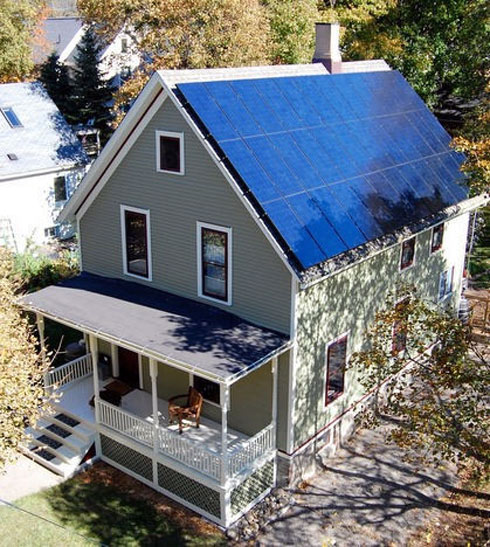
I reported here in recent days on homeowners in the northern midwest who have been able to convert a 100 year old existing home into a “net zero” dwelling – producing more energy than it uses.
It seems Washington is catching up. The Wash Post reported in February on efforts to build a “net zero” home in the DC area – which, given the much more southerly climate, would seem to be a relative no-brainer.
much of the “net-zero” building approach is within many homeowners’ grasp. Betsy Pettit, president of Building Science Corp., who served as the architect and building sciences consultant, agrees.
“In most buildings, you can lower energy usage by 40 to 50 percent by using existingoff-the-shelf technology, if it’s selected properly, installed properly and maintained properly, and attention is given to detail,” Fanney says.
It’s more great examples of why a rapidly growing network of pioneers are not willing to be blackmailed by the fossil fuel industry’s threats of “do what we say or you’ll freeze in the dark…”
>>
“In most buildings, you can lower energy usage by 40 to 50 percent by using existingoff-the-shelf technology, if it’s selected properly, installed properly and maintained properly, and attention is given to detail,”
I’m calling my congressman. There is no reason that home energy efficiency standards couldn’t become a reality. An economy that uses its resources efficiently is an effective economy. Think of the jorbs, too.