

Part one was yesterday.
Music Break: Mr. Rogers and the Garden of Your Mind
Trust me on this one.
Mister Rogers remixed by Symphony of Science’s John D. Boswell for PBS Digital Studios.
I’m at a conference on Energy Efficiency in Traverse City, MI. More postings later today, I hope.
Arctic Ice Melt Dips Below 2007 Levels

It’s the time of year when a lot of people start checking the status of Arctic ice cover, heading for the september minimum. Here’s what it looks like this week. Blue line is current level. Green dots are the record low 2007 pace. Too early to make predictions based on this, but something to keep in mind. For context, last year’s sea ice video below.
Lake Superior and Climate Change
The media gives us a lot of coverage of climate impacts in the American Southwest, or more exotic locales around the planet, than we generally get of the upper midwest.
That’s too bad, because something like 20 percent of the world’s fresh water is concentrated here. I can imagine a number of scenarios where that fact becomes a lot more urgent in coming decades. The health of the entire Great Lakes system is determined by the health of the greatest lake, Superior. As the video points out, the Lake is warming at a rate much faster than would have been predicted. The map below shows that, in fact, the upper Great Lakes area as a whole has been warming faster than the surroundings over the last 40 years.

You may have seen the ocean. You have have driven by Lake Ontario or Erie. You might have glimpsed Lake Michigan from the loop in Chicago. But if you haven’t spent time on Lake Superior, there’s something there that I will never be able to describe to you.

Beyond Oil: Drawing a Line in the (Tar) Sand
Chris Mooney on “The Republican Brain”
I’ve been sitting on this interview with Chris Mooney since meeting him in December at the American Geophysical Union Conference.
 I had hoped by now to pull this into a larger piece on Republican science denial, which I still expect to do, but I think the interview is worth watching now rather than waiting. I started reading “The Republican Brain” a few days ago, (my first iPad book buy..) and it is clear and eye opening.
It’s also, sadly, all the more timely in light of the continued absurdity of GOP lawmakers simply unable to even speak the words “sea level rise” –
Virginia’s legislature commissioned a $50,000 study to determine the impacts of climate change on the state’s shores. To greenlight the project, they omitted words like “climate change” and “sea level rise” from the study’s description itself. According to the House of Delegates sponsor of the study, these are “liberal code words,” even though they are noncontroversial in the climate science community.
Instead of using climate change, sea level rise, and global warming, the study uses terms like “coastal resiliency” and “recurrent flooding.” Republican State Delegate Chris Stolle, who steered the legislation, cut “sea level rise” from the draft. Stolle has also said the “jury’s still out” on humans’ impact on global warming:
State Del. Chris Stolle, R-Virginia Beach, who insisted on changing the “sea level rise” study in the General Assembly to one on “recurrent flooding,” said he wants to get political speech out of the mix altogether.
He said “sea level rise” is a “left-wing term” that conjures up animosities on the right. So why bring it into the equation?
“What people care about is the floodwater coming through their door,” Stolle said. “Let’s focus on that. Let’s study that. So that’s what I wanted us to call it.”
Somehow, this seems an appropriate bookend:
Portland: The Trip Not Taken
More from Earth The Operators Manual.
Decisions made 30 years ago pay off in fewer car trips, and a more livable community.
New Apple Campus to be Enormous Solar Installation

As more and more projects of this type pave the way, builders that are wedded to the architectural practices of past centuries will eventually all come around, and all of our buildings will become net producers, instead of primary wasters, of energy. They will also be more beautiful, and humane, bringing greater health and productivity to those who live and work inside them.
The potential was underlined a few weeks ago, when Germany, one of the world’s most heavily industrialized nations, was producing almost HALF of its electricity from solar collectors like Apple will install here.
The application of this kind of technology is a threat to the very existence of the fossil fuel monopoly – it strikes at the heart of the oligarchic power of the Koch Brothers and their plutocratic brethren. That’s why the climate denial machine is doing all it can to slow or stop this progress.

The city of Cupertino, Calif., has posted online numerous floor plans and rendering of Apple’s proposed Campus 2 building.
The additional images of Campus 2 show more sides and aspects of the building Apple is hoping to build to house an additional 13,000 employees
The city posted the floor plans and renderings Thursday.
Apple hopes to begin construction later this year and move into the building, which has been described as looking like an object from outer space, by 2015.
Last month, Apple sent its neighbors in Cupterino a brochure seeking feedback. The building is awaiting final approval from the city.
Among Campus 2’s features would be a 1,000-seat auditorium, a fitness center and a rooftop solar array that would make Apple one of the country’s largest solar power generators.
Steve Jobs, Apple’s late cofounder, announced plans for the building last year. Though he’d stepped down as CEO, Jobs pitched the project to the Cupterino City Council in June.
But while Campus 2 will certainly be an impressive building, Apple has said it will not replace 1 Infinite Loop as its main headquarters.
Prometheus Benefits from Science Input. Could have used some Writing Input too, but…
Ok, I took a couple hours off and went to see Ridley Scott’s new movie “Prometheus”, widely touted as the prequel to the classic “Alien”, which is on everybody’s 10 best list for sci-fi movies. Will try not to give anything away.
If you are looking for pure entertainment, and you have not seen “The Avengers”, go there. Ditto if you are taking the kids.
Prometheus gets a 9 for intensity, a 7 as a reasonably engaging waste of time, and a 5 for logic and comprehensibility. The Washington Post, below, notes that the producers consulted exobiologists for a rationale as to why characters might be able to take their helmets off on a distant moon.
Any nine year old knows that you never, never, never, NEVER take your damn helmet off when inspecting an alien installation of any kind, much less one with, – well, never mind…
Just don’t freaking take the damn helmets off, and DO NOT approach that weird snake-like thing – if you want to be a sympathetic character – because if you are that stupid, I really don’t care what happens to you…
There’s a moment early in the new sci-fi film “Prometheus” where a scientist doffs his helmet on a distant alien moon.
Solar Auction Turns Roof Space into Energy and $$$
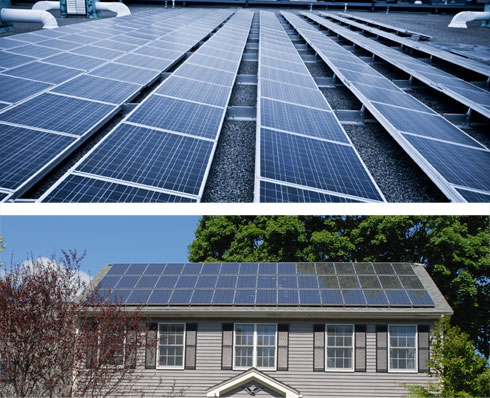
When you understand the potential of the rapidly evolving renewable energy revolution, you get why fossil fuel interests, and their reliable Fox News echo chamber, are so desperately trying to distort the good news, and block progress on the emerging industrial revolution. One of the world’s leading industrial nations, Germany, on a recent sunny afternoon, was producing almost HALF of its electricity from solar arrays on millions of roofs.
Germany’s substantial investments in solar energy go back decades, and progress has been building gradually. But it passed a notable benchmark last week when its solar power met almost half of the country’s electricity demand at mid-day on a Saturday, and a third of its needs on a Friday, when industry was cranking full steam.
The development broke all records for solar power — at peak output, Germany used 22 gigawatts of solar generated electricity. That highlights Germany’s leadership position in the field — it has nearly as much solar power capacity as the rest of the world combined. And, in a country that plans to eventually abandon all nuclear energy in the wake of the Fukushima nuclear disaster, the amount produced on these very sunny two days was equal to the generating capacity of about 20 nuclear stations, according to press reports.
And that revolution will not be stopped here in the US, any more than buggy whip manufacturers could stop Henry Ford, or Rush Limbaugh’s ridicule could stop “Al Gore’s information Superhighway”.
Your most overlooked piece asset, your roof, is now a hot market.
A new firm launching this month, Gridbid, allows homeowners to auction the solar installation rights to their roofs online. The company says solar installers can save as much as 80% of what what they normally spend to find roof-top space, while the average residential utility bill drops between 10 to 35%.
Just because you want solar power (and you probably do, it’s starting to become the cheapest option in many states) doesn’t mean it’s easy to find a company to put panels on your roof. On the other side of the coin, there has been a proliferation of solar installers, companies that will pay for your solar installation in exchange for a cut of the money you make selling your extra solar power back to the grid. But these companies need lots of roofs to put their panels on, in order to scale their business. It’s pretty costly for them to go scout locations and then try to sell people on solar panels. Gridbid aims to be an easy place to connect these two mutually interested parties.
The idea, according to founder Thomas Kinshanko, CEO of parent company Habitat Enterprises, came after seeing all the inefficiencies that still plague the market for residential solar. “After speaking with over 100 players in the solar market, we found that solar installers were paying way too much in business development costs (sometimes up to 20% of total project cost) and building and home owners were struggling to find and select high quality, affordable solar installers,” says Kinshanko. “We came up with Gridbid to solve both problems.”
Piloted this March, Gridbid says it auctioned more than $300,000 in rooftop solar projects during its first week online, helping building owners go solar, while some of the 4,000 or so solar installers in the US competed to install more panels. Owners filled out a short online form and GridBid computed roofs’ solar potential and projected monthly savings. Local installers then submited “bids” for owners to select the best deal.
Globally, there’s no shortage of demand. McKinsey and Company’s Solar Power report(PDF) finds the solar-photovoltaic (PV) sector is already a $100 billion business, with installed capacity to grow almost 100 fold to 500 GW in the next eight years.