Continue reading “Dear Mr President: Start Respecting Science”China has rightfully taken criticism for squelching attempts by scientists to report information during the outbreak. Now, the United States government is doing similar things. Informing Fauci and other government scientists that they must clear all public comments with Vice President Mike Pence is unacceptable. This is not a time for someone who denies evolution, climate change, and the dangers of smoking to shape the public message.
—
While scientists are trying to share facts about the epidemic, the administration either blocks those facts or restates them with contradictions. Transmission rates and death rates are not measurements that can be changed with will and an extroverted presentation. The administration has repeatedly said—as it did last week—that virus spread in the United States is contained, when it is clear from genomic evidence that community spread is occurring in Washington state and beyond. That kind of distortion and denial is dangerous and almost certainly contributed to the federal government’s sluggish response. After 3 years of debating whether the words of this administration matter, the words are now clearly a matter of life and death.
And although the steps required to produce a vaccine could possibly be made more efficient, many of them depend on biological and chemical processes that are essential. So the president might just as well have said, “Do me a favor, hurry up that warp drive.”
I don’t expect politicians to know Maxwell’s equations for electromagnetism or the Diels-Alder chemical reaction (although I can dream). But you can’t insult science when you don’t like it and then suddenly insist on something that science can’t give on demand. For the past 4 years, President Trump’s budgets have made deep cuts to science, including cuts to funding for the Centers for Disease Control and Prevention and the NIH. With this administration’s disregard for science of the Environmental Protection Agency and the National Oceanic and Atmospheric Administration, and the stalled naming of a director for the Office of Science and Technology Policy—all to support political goals—the nation has had nearly 4 years of harming and ignoring science.
Month: March 2020
Climate plus Dumb Development = Disaster
Recently discovered this CNBC series with Diana Olick reporting on the interface of climate, economics and real estate. Will post from time to time.
I used clips from an Olick report in my most recent Yale Climate Connections vid.
PanDumbic: Corona Response Mirrors Climate Change Denial
The parallels between Republican response to Covid19 vs Climate Change are striking, and only growing more so.
The virus is – in effect, Climate Change response in a test-tube.
Above, the Daily Show has a take. Below, key indicators.

Fox News host Sean Hannity took to his radio show Wednesday to once again downplay concerns over the coronavirus outbreak, this time citing a Twitter crank to credulously claim that it might “be true” that the “deep state” is using the pandemic to hurt the economy and push “mandated medicines.”
Hannity, who also serves as an informal adviser to President Donald Trump and is sometimes referred to as the White House chief of staff, first pointed to a far-right blog to insist that the American public is approving of the president’s response to the coronavirus.
Renewable Market Tested by Corona/Oil Crash

Continue reading “Renewable Market Tested by Corona/Oil Crash”Oil’s fall to some $35 a barrel from $55 just last week has major implications for addressing climate change. Low prices incentivize more use of oil; it squeezes the budgets of oil companies, putting clean-energy projects in doubt; and some governments feel pressured to prop up struggling oil companies. All that drives up emissions, which is bad news for global warming.
However, if low prices are sustained this time, there might be big positives for fighting climate change.
Renewable energy is a more mature industry than five years ago. As it becomes a less risky investment, it has attracted big investors who are showering a lot of cash and building some projects that rival the capacity of conventional power plants. At the same time, oil exploration is becoming less viable economically, with an increased risk that even those projects that go ahead no longer yield good returns and with worries about stranded assets growing.
“Now it doesn’t make sense to reduce your investment in renewables if the oil price crashes,” said Mark Lewis, head of sustainability at BNP Paribas Asset Management. “It’s more logical to reduce your investment in oil.”
That reality points to a broader change in investor sentiment since Paris that affects companies and governments alike. A number of large investors have come together under groups such as Climate Action 100+ to demand companies put sustainability at the heart of their business models, and that isn’t likely to change.
Tesla has effectively become a proxy for how the green economy is viewed by investors. Musk has demonstrated that a mass-market electric car is viable, prompting all the major carmakers to follow his lead. He’s building his latest plant outside Berlin, in a show of his intention to take the fight to the heart of Europe’s leading luxury car producer. Tesla is after all the world’s second-most valuable carmaker by market value after Toyota Motor Corp.
For governments worldwide, pressure for policy measures has mounted as the issue increasingly resonates, in part due to the kind of direct action and media campaigning espoused by Greta Thunberg.
Low oil prices offer one reason to heed that voter call, since it’s a good time to end fossil-fuel subsidies or to raise taxes on consumption of fossil fuels. Such a move can also help avoid the sorts of destabilizing anti-government protests seen in France, Iran and Ecuador when energy-price increases were proposed.
It could even be done in a way that “protects or even benefits poorer households and communities,” said Helen Mountford, vice president of climate and economics at the World Resources Institute. The goal of reaching out to “left-behind” communities is a dynamic driving policy from the post-Brexit U.K. to South Africa and swaths of Latin America that suffered waves of unrest late last year.
How We Got Here: Right Wing Science
UPDATE:
Renewables Catching up with Coal in US

Institute for Energy Economics and Financial Analysis:
The unthinkable occurred in the U.S. last month: In the dead of winter, renewable energy (utility-scale solar, wind and hydropower) generated more electricity than did coal plants.
This has never happened before.
Specifically, according to data from the U.S. Energy Information Administration’s (EIA’s) new hourly electric grid monitor, renewables generated 56,981,597 megawatt-hours of electricity during February while coal produced 54,733,731 MWh.
The data comes with a few caveats. EIA notes that the numbers are not final (there is a two-month lag until numbers are confirmed in the Administration’s Electric Power Monthly) and that the new web-based resource is still undergoing beta testing. Still, the likelihood that renewable generation outperformed coal during the winter, historically a high-demand season for coal-fired generators, is a clear sign of the rapid transition that is reshaping the U.S. electricity sector.
The first time renewables outproduced coal, last April, was a landmark month (see: April is shaping up to be momentous in transition from coal to renewables). February 2020’s results are, if anything, even more important given the time of the year and some of the underlying data. As we noted at the time, the April 2019 results were somewhat influenced by the industry practice of taking coal plants offline during lower-demand seasons (spring and fall) to perform maintenance and upgrades in preparation for higher energy demand during the summer and winter months.
Even more interesting is comparing the daily figures of coal generation last April with this February’s results. February logged 11 days when coal-fired generation totaled less than 1.8 million megawatt-hours (MWh); last April witnessed only five such days. At the other extreme, April 2019 marked 13 days when coal-fired generation topped 2 million MWh; February 2020 recorded only eight. Most tellingly, for the month as a whole, coal generated an average of 1.98 million MWh daily last April; while this February the daily average was just 1.88 million MWh. All of this EIA data can be found here.
More Talk about Hydrogen

More and more talk about Hydrogen as an energy storage medium.
Mark Jacobson has long identified H2 as potential answer for aircraft and shipping. The downside is loss of efficiency in electrolyzing H2O – then having to convert again to get useful energy for whatever. But as renewables proliferate, prices drop, and demand for storage and molecular fuels grows, obviously some key players are interested.
Continue reading “More Talk about Hydrogen”Germany will include only the greenest sources of hydrogen in a package of incentives designed to build up the fuel as a low-carbon source of energy, according to a draft government strategy document.
The move, if endorsed by Chancellor Angela Merkel’s cabinet, would be a blow to natural gas producers, which increasingly see hydrogen as part of the way they can adapt to tightening rules on greenhouse gas emissions.
Hydrogen burns without producing carbon dioxide and has the energy to provide temperatures of 1,000 degrees Celsius or more needed by steel makers and oil refiners. Yet much of the fuel currently is derived from natural gas, throwing off carbon emissions in the process. Germany wants to focus its support on green hydrogen, where the gas is made with electricity from renewables.
“From the federal government’s point of view, only hydrogen that is produced on the basis of renewable energies is sustainable in the long term,” according to the draft government document seen by Bloomberg News. “It is therefore the goal of the federal government to use green hydrogen and to support a rapid market ramp-up and to establish corresponding value chains.”
Germany will include only the greenest sources of hydrogen in a package of incentives designed to build up the fuel as a low-carbon source of energy, according to a draft government strategy document.
The move, if endorsed by Chancellor Angela Merkel’s cabinet, would be a blow to natural gas producers, which increasingly see hydrogen as part of the way they can adapt to tightening rules on greenhouse gas emissions.
Hydrogen burns without producing carbon dioxide and has the energy to provide temperatures of 1,000 degrees Celsius or more needed by steel makers and oil refiners. Yet much of the fuel currently is derived from natural gas, throwing off carbon emissions in the process. Germany wants to focus its support on green hydrogen, where the gas is made with electricity from renewables.
“From the federal government’s point of view, only hydrogen that is produced on the basis of renewable energies is sustainable in the long term,” according to the draft government document seen by Bloomberg News. “It is therefore the goal of the federal government to use green hydrogen and to support a rapid market ramp-up and to establish corresponding value chains.”
“It is disturbing that the government wants to slash any ideas of technology openness,” said Timm Kehler, chairman at the gas industry lobby group Zukunft Erdgas. “It will limit Germany’s production capacity of CO2-neutral hydrogen and eliminate the country’s own industry from the game.”
New Black Widow Trailer
I’m all in.
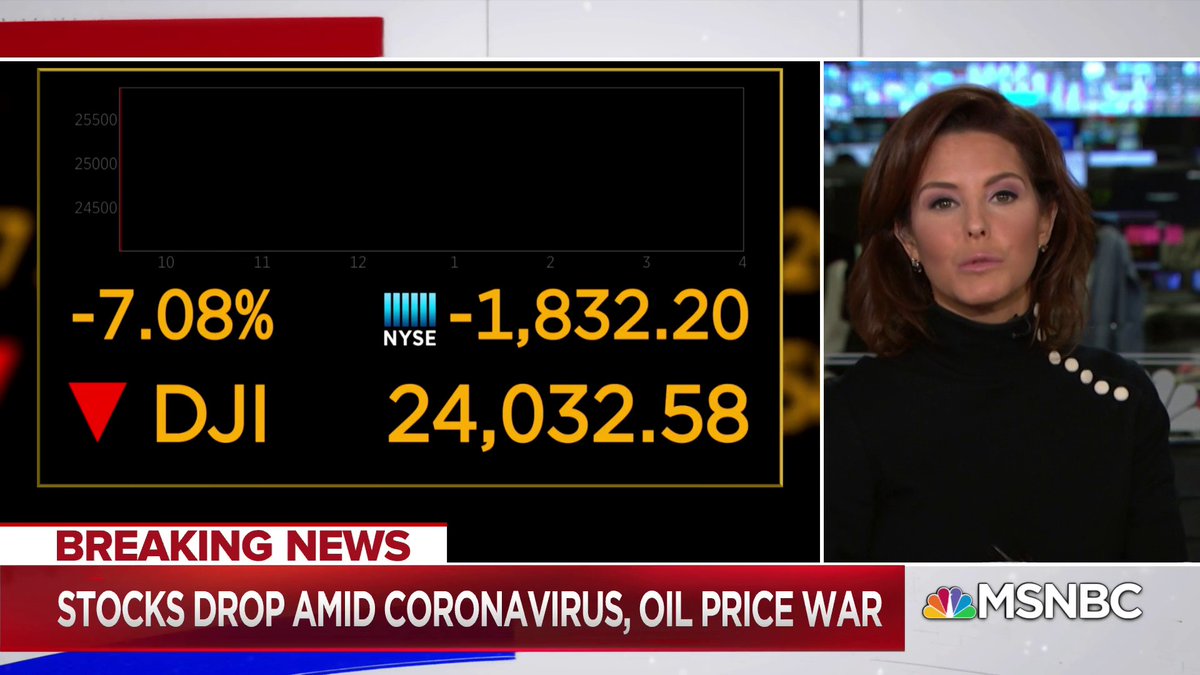
Oil’s Crash: What’s Next?

Twitter Thread from Gregory Brew – Brew is a PhD historian of oil, the Middle East, US foreign relations and Iran.
—
For all my non-oil peeps, an update:
A few days ago, the big OPEC/Russia meeting ended without a deal to cut production. Now Russia and Saudi, the two biggest exporters, are saying they’re going to maximize production and flood the market.
So why does this matter?
This move is a response to years of frustration: as OPEC/Russia have cut, they’ve lost market share to US shale, which has won a big piece of the market and turned the US into a major exporter for the first time in decades.
Saudi had led the charge to cut production. But this time, Russia wasn’t having it. And now the Saudis have announced big discounts on their crude, particularly the stuff they sell to the US. It’s essentially a declaration of war on US producers. Expect gas prices to plummet
US shale has changed the whole global oil picture. But companies are drowning in debt. The squeeze started late last year, as Wall Street started pressing firms to tighten up and impose some fiscal discipline. Folks expected in 2020 to see the pace of growth in the US patch slow.
But what we might see now is a bloodbath. Gas prices have been floating between $50-60 all year. Most companies can turn a profit at that level. But now prices are in the $40s, with the Saudi surge likely to send them into the $30s. The impact will be massive.
Uncertainty on the market, declining demand, high competition and low profitability is going to hit the domestic US industry hard. It wont kill it entirely, but it will certainly depress investment.
Economically, this could get very bad for Texas and North Dakota, where the oil and gas industry carries a lot of weight. Most companies are hedged, so even sweeping bankruptcies or defaults might not produce economic impacts—a shale bubble might not impact the broader US economy
Low gas prices are usually a plus. But for Trump, this could take the wind out of the whole “energy dominance” thing. The broader economic impact might be worse than some expect.
But what this really shows is the Russian determination to win back some territory on the global oil market—and their willingness to do this, however it might impact the US economy. And Saudi followed suit almost immediately
It’s a price war—what happens in global oil when cooperation breaks down and competition becomes cut-throat.