Sustainability is Proven Better Business

mossleaves2

Hunter Lovins in Natural Capitalism Solutions:

It’s become weirdly fashionable to criticise companies cutting their impact on the environment and implementing more sustainable practices as insufficient.

A recent piece by Charles Eisenstein claimed: “Let’s be honest: real sustainability may not make business sense.”

That’s just wrong. More than 50 studies (PDF) from the likes of those wild-eyed environmentalists at Goldman Sachs show that the companies that are the leaders in environment, social and good governance policies are financially outperforming their less sustainable peers. Sustainability is better business –and we can prove it.

Richard Smith in “Green Capitalism: The God That Failed”, gets it even more wrong. He asserts: “The results are in: no amount of ‘green capitalism’ will be able to ensure the profound changes we must urgently make to prevent the collapse of civilisation from the catastrophic impacts of global warming.” He calls for “abolition of capitalist private property in the means of production and the institution of collective bottom-up democratic control over the economy and society.”

Eisenstein’s critique stems from not believing corporate masters are sufficiently spiritual for his taste. I’d argue he’d be surprised at the deep sense of stewardship with which many approach their sustainability commitments. Smith’s Marxist aversion to any form of capitalism makes his assertions silly. It’s easy to pick outrageous corporate behaviour and allege that no form of capitalism can deliver a world that, in Bucky Fuller’s words, “works for 100% of humanity”. Conversely, it would be equally easy to cite decades of environmental and human rights travesties perpetrated by communist governments.

Verbal ping-pong like this reminds me of David Brower’s observation that when the environmental movement is in trouble it circles the wagons and shoots in.

The interesting question that neither critic tackles is that without serious corporate action to implement more sustainable practices, what is it going to take to solve the challenges threatening life (PDF) as we know it?

Continue reading “Sustainability is Proven Better Business”

Military Response to UK Storms

First Responders to Severe Storm damage in the UK.

Video coming on the causes and effects of the severe UK storms.

Description:

February 15, 2014:
A major clean-up is taking place after large parts of England and Wales were battered by heavy rain and gusts of up to 80mph, leaving tens of thousands without electricity.
The South, particularly along the coast, was worst hit as strong winds brought down hundreds of trees and damaged power lines. Some roads and rail lines were closed. Continue reading “Military Response to UK Storms”

Polar Vortex to Return

As I post, a steady rain outside is melting the deep snow. There’s rumble of thunder. Will children in the future believe that thunder was once something that did not occur in January and February, in this part of the world?

Jeff Masters at WeatherUnderground:

Fortunately (?) for the Midwest, this week’s thaw will be short-lived, preventing the kind of major flooding that would result if all of the snowpack were to melt in a week. This morning’s runs of the GFS and European models were better able to handle the evolving upper-air pattern over the Pacific Ocean, and it appears that their earlier runs seriously underestimated the strength of a ridge of high pressure forecast to build over the Western U.S. 6 – 10 days from now. This ridge will be accompanied by a return of the cold “Polar Vortex” over the Midwest and Northeast U.S., bringing bitter cold temperatures and strong winds. Temperatures 20°F below normal will likely invade the Upper Midwest on Sunday, and gradually spread southeastwards during the week. The peak cold is predicted to occur late next week, with temperatures 20 – 35° below normal covering much of the eastern 2/3 of the country. As a result of these new model runs, the natural gas market has been soaring ever since early this morning, and is now approaching a five-year high of $6.

Arctic Sea Ice, Warmed by Air and Water, is at Record Low for February

arcticfebrec

Kitsap Sun:

Arctic sea ice growth has slowed dramatically in recent weeks, thanks in large part to abnormally warm air and water temperatures. Sea ice now sits at record low levels for mid-February.

According to the National Snow and Ice Data Center, as of February 18, sea ice covered about 14.36 million square kilometers in the Arctic. The previous low on this date was 14.37 million square kilometers in 2006.

The main culprit — in addition to the overall trend of global warming — is likely the rash of warm temperatures. With the polar vortex bringing cold air down to the U.S. this winter, warmer temperatures have been the norm in the Arctic. From February 1-17, temperatures were 7.2 to 14.4F above normal for much of the Arctic. Some areas have been even warmer.

Continue reading “Arctic Sea Ice, Warmed by Air and Water, is at Record Low for February”

New Video: The Business Impact of Abrupt Change

From the hours of marathon interviews conducted by Geoffrey Haines-Stiles, Dr. Jim Byrne, and myself at last December’s American Geophysical Union.

I’m trying to pull out small uncut gems.

Boulder Daily Camera:

A new National Research Council report calls for the development of an early warning system that could help better anticipate sudden changes resulting from climate change.

Professor James White, of the University of Colorado’s Institute of Arctic and Alpine Research and the chair of the National Research Council committee that produced the report, said climate change has increased concern over possible large and rapid changes in the physical climate system, including Earth’s atmosphere, land surfaces and oceans.

“Climate doesn’t change in a nice, linear way,” he said. “There are thresholds and tipping points in the system. If we cross one of those, handling or adapting to that is going to be a challenge. When it comes to adaptations, speed kills.”

Continue reading “New Video: The Business Impact of Abrupt Change”

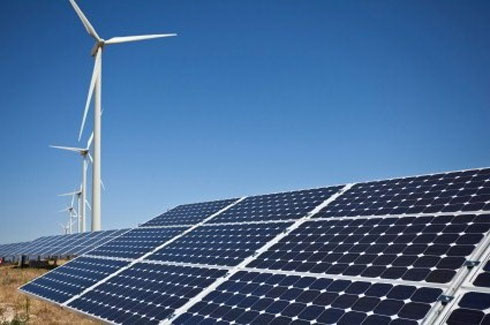
Emerging New Solar SuperPower: Iowa

solarwind

Des Moines Register:

The sun could power more of Iowa’s energy needs, with solar potential that exceeds sunny states like Florida, Georgia and Utah, a new report shows.

“The potential for solar in Iowa is quite significant,” said Nathaniel Baer, energy program director for the Iowa Environmental Council, the Des Moines group that released the report Thursday looking at solar energy in Iowa.

“There are a number of important benefits that we’ve seen from wind that can be true for solar as well — from cleaner air and water to more jobs and more economic investment. … It’s time to catch up,” Baer said.

The amount of solar energy Iowa could reasonably produce would place the state 16th in the nation, the report says. That would put it ahead of states like Florida, Georgia, Utah, Missouri, North Carolina and South Carolina, “even though as much or possibly more sun reaches those states.”

The report says Iowa could generate a maximum of 7 million gigawatt hours of solar photovoltaic, or PV, energy. It’s an amount that far exceeds the 57,000 gigawatt hours generated by all energy sources — coal, gas, wind and nuclear — in 2010, the group says in the report, or the 45,000 gigawatt hours Iowans consumed that year.

“This means that Iowa’s potential for solar PV — if fully utilized — is many times larger than Iowa’s need for electricity,” the report says.

Solar power is most available when consumers need it, according to the group, and can be used to supplement traditional sources of power. “Iowans can rely on solar energy when demand is at its highest, during hot, sunny afternoons, and solar PV can provide substantial energy all year long,” the report says.

The cost is declining as technology improves, the report says. “While the cost to install a watt of solar PV averaged $7.50 in 2008, that cost had come down to about $4 per watt in 2012.”

Greentechmedia:

Iowa is well established as a national leader in wind energy and biofuels. Now the state is poised for serious growth in solar as well.

“The market is exploding in Iowa,” says Tim Dwight, a former Iowa Hawkeye and NFL star who has become one of his home state’s most visible solar energy advocates.

Homeowners, farmers, businesses and at least one school district in Iowa are going solar. Also, over the past year, several municipal utilities and rural electric co-ops have put up solar arrays, inviting customers to buy a share of the power generated.

“Solar growth in Iowa is where wind was in the first decade of the 2000s,” says Bill Haman of  the Iowa Energy Center. “We saw an explosion in wind.”

In Frytown, just outside Iowa City, the Farmers Electric Cooperative has been steadily adding on to a community solar project established on its property in 2011. And a few weeks ago, the co-op announced plans to put together a 750-kilowatt solar farm, which would be the largest solar-energy project in the state. It’s projected to meet about 15 percent of the co-op’s demand for power.

Continue reading “Emerging New Solar SuperPower: Iowa”

Solar Jobs Soar in New Survey

solarjobs14

If you’d bet against Elon Musk when he started Paypal, Space-X, or Tesla Motors – you would have lost big.
Recently I posted Musk’s prediction that solar energy would be the Nation’s leading energy source 20 years from now.
That transformation is underway.

Solar Foundation:

Our research shows that solar industry employment has grown by an astonishing 53% – or nearly 50,000 new solar jobs – since we first started tracking them in 2010. Leading this growth are businesses in the installation sector, in which solar employment has grown by nearly 60% over the four- year period covered by the Census series, representing more than 25,000 jobs created in the sector since 2010. With leading market analyses predicting continued growth in annual installed solar capacity, it is likely that the national solar workforce will continue to experience similar growth.

U.S. solar companies continue hiring faster than the overall economy, and remain optimistic about future growth. As of November 2013, the solar industry has grown to 142,698 solar workers.1 This is an increase of almost 20% over our Census 2012 findings, and represents a growth rate that is ten times faster than what the overall U.S. economy experienced during that same time period. Over the next 12 months, nearly 45% of solar establishments expect to add jobs, while fewer than 1.9% expect to cut workers, yielding an expected 15.6% growth in employment. This finding is especially relevant given that employment in the overall U.S. economy is projected to grow by only 1.4% over the next 12 months.

Continue reading “Solar Jobs Soar in New Survey”

Where Wind Energy is Up, Electrical Prices are Down

wind_hay

Sustainable Business:

Electric bills are trending down for people that live in high-wind states, according to research by the American Wind Energy Association (AWEA).

The 11 states that get more than 7% of their electricity from wind energy have seen their electric prices decrease by 0.37% over the past five years, in contrast to all other states, where electricity prices have increased 7.79% during that time.

The 11 states are: Texas, Wyoming, Oregon, Oklahoma, Idaho, Colorado, Kansas, Minnesota, North Dakota, South Dakota, and Iowa.

Texas is on the verge of getting 10% of electricity from wind; Iowa and South Dakota already get 25%.

The more wind capacity they have, the more rates have come down.
Continue reading “Where Wind Energy is Up, Electrical Prices are Down”

I’m On a Deadline, and Need Some Sciencey Sounding BS Fast. Can You Help?

bigbilllittleMy friends at Desmogblog send this along.  Apparently their email got into Bill (“tide comes in tide goes out, you can’t explain that”) O’ Reilly’s rolodex.

Desmogblog:

Look out, folks. Bill O’Reilly is about to talk about global warming again on the O’Reilly Factor.

Of course, he’s already reached his conclusion that “Nobody can control the climate but God.”  It’s just that he doesn’t have any data to back up his anti-science position.

So he has one of his producers on the hunt today, apparently scrambling last minute, looking for “the very best arguments” to support climate change denial. Here’s the email DeSmogBlog received this morning: (above)

I feel for O’Reilly’s producers, honestly. It must be tough to face this “very tight deadline” problem when asked to provide factual support for a baseless, ideologically-motivated assumption.

Good luck, Robert and friends. It’s a difficult job making stuff up so your boss can maintain his politically driven network’s ignorance about climate science.

Who knows, maybe he’ll surprise us this time. Stay tuned.