In his recent address to the National Press Club, Energy Secretary Steven Chu, who has urged a rapid transition to renewable energy, was asked about possible bottlenecks in the supply of rare earth minerals used in wind turbines, solar collectors, and advanced batteries. (here, at 42:30) His answer was, basically, that “rare earths” are not, in every case, that rare – that, with responsible extraction techniques, they are available in many parts of the world, and that increased prices were sparking a search for substitutes and alternative supplies.
Here are some examples:
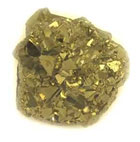
Iron pyrite — also known as fool’s gold — may be worthless to treasure hunters, but it could become a bonanza to the solar industry.
The mineral, among the most abundant in the earth’s crust, is usually discarded by coal miners or sold as nuggets in novelty stores.But researchers at UC Irvine said they could soon turn fool’s gold into a cheaper alternative to the rare and expensive materials now used in making solar panels.
“With alternative energy and climate-change issues, we’re always in a race against time,” said lead researcher Matt Law. “With some insight and a little bit of luck, we could find a good solution with something that’s now disposed of as useless garbage.”
The UCI team believes the mineral can be processed into a thin film for use in photovoltaic cells, and could eventually convert sunlight into electricity at roughly the same rate as existing technology.
Though it’s too early to estimate the cost of cells made with pyrite, Law said they’re likely to be cheaper because fool’s gold is so readily available. A prototype could be ready within the year, but it could be at least three years before the cells are commercially available.
Toyota Developing new Substitutes for Rare Earths
Toyota has announced that it is developing a new alternative electric motor to be used in its hybrid vehicles. The new motor is being designed to reduce the need for rare earth Toyota uses in the construction of its vehicles. The move comes after a spat between Japan and China led to China withholding shipments of rare earth to Japan for a few months.
China produces 97% of the world’s supply of rare earths that are use in all sorts of items from electronics to hybrid vehicles and more. The move will make it easier for Toyota to operate without the material from China should there ever be an issue with supply again.
According to a report by AP:
Analysts said production of such vehicles was still small enough that there was little short-term risk from a shortage of rare earths, but this could change quickly.
“This isn’t a major issue right now, but as these types of cars become more popular, it becomes a big risk if supply is limited or cut off,” said Mizuho Investors Securities auto analyst Ryoichi Saito.
He said it made sense for companies that make high-tech products to be developing alternatives, given trade uncertainties with China. Japan has also actively pursued deals around Asia to develop alternative sources.

The new Chinese embargo on exports of rare earth elements could have the most severe impacts on two high-growth fields, wind-power turbines and hybrid-electric vehicles. But there’s a ready solution for both fields that doesn’t use rare earths at all — and is a more-effective and lower-cost technology as well.
Most current wind-power systems and hybrid vehicles use permanent magnet motors, which require significant amounts of the rare earth metals neodymium and dysprosium.
But new advanced-technology drive motors don’t require rare earths: The powerful new Chorus Meshcon motor is an advanced AC induction motor that co-opts electromagnetic harmonics to offer dramatic improvements in torque, size, weight, and reliability. A multiphase Chorus Meshcon motor can produce five times the startup torque of a same-sized three-phase conventional motor, and more than a comparable permanent magnet motor. And it uses no rare earths or other exotic materials at all.