Explainer: Why Banning Diesel Exports Won’t Work

Report above from WHAM Rochester New York.

Administration panicking about Diesel prices, but the reflexive remedy guaranteed to make things worse.
How come Democrats have to explain markets to Republicans?

Jared Bernstein on Substack:

—The location problem. If we stop exporting diesel it will mostly be stuck where it is refined, around the US Gulf states. Why stuck? Because there are two ways to get refined product to where it’s needed: pipelines and ships. Well, the main pipeline (Colonial Pipeline) invariably runs at capacity and the Jones Act, which bans non-US commercial vessels from shipping goods between US ports, has meant that New England, where it’s about to get cold (diesel and heating oil are common distillates), directly imports diesel. Now, the Jones Act is currently waived, so that’s potentially helpful, but it’s been the law of the seas for decades and so far, US Gulf-to-east-coast waterborne shipments have gone up only slightly relative to pre-waiver.

Continue reading “Explainer: Why Banning Diesel Exports Won’t Work”

AI Researcher’s Passionate Address at UN

Yoshua Bengio is a Canadian computer scientist, and a pioneer of artificial neural networks and deep learning. Bengio received the 2018 ACM A.M. Turing Award, often referred to as the “Nobel Prize of Computing”, with Geoffrey Hinton and Yann LeCun for their foundational work on deep learning.

He is the most cited computer scientist worldwide, and the most-cited living scientist across all fields (by total citations).


Takeaway – “As with other world changing technologies, we can shape the outcome, I’m confident we can create AI that demonstrably remains under our control, and supports human joy and endeavor..It’s an urgent mission for humanity.

We must work together on technical solutions that make AI safe by design, guaranteed by International agreements.”

European Leadership Network:

One of the few institutions to survive the past decade’s erosion of international security agreements is the Comprehensive Nuclear-Test-Ban Treaty (CTBT) – the agreement banning nuclear test explosions in all environments.

Continue reading “AI Researcher’s Passionate Address at UN”

Arctic Ice Reaches 2026 Annual Minimum

NASA:

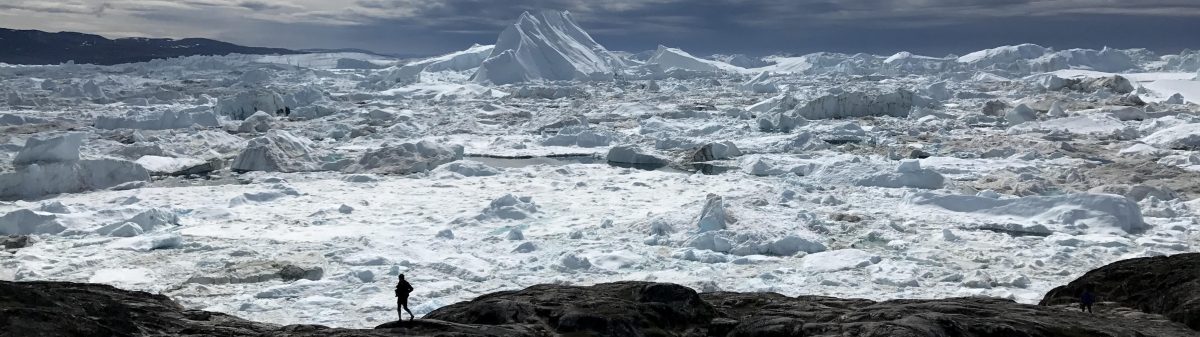
Arctic sea ice reached its annual minimum extent on Sept. 12, according to NASA and the National Snow and Ice Data Center (NSIDC) at the University of Colorado Boulder. The ice covered an estimated 1.78 million square miles (4.6 million square kilometers), tying 2008, 2010, and 2025 for the 10th-lowest minimum in the satellite record.

The 2026 minimum is consistent with patterns observed in the satellite record. The past 20 years, from 2007 through 2026, have produced the 20 lowest annual Arctic sea ice minimum extents observed since continuous satellite measurements began in late 1978.

Arctic sea ice grows during the dark, cold autumn and winter and retreats as temperatures rise during spring and summer, typically reaching its lowest extent in September. Weather conditions can cause substantial differences in the amount of ice that melts from one summer to another.

Over the last decade, for example, increased cloud cover has prevented solar radiation from further accelerating the melt of sea ice, according to Linette Boisvert, a sea ice scientist at NASA’s Goddard Space Flight Center in Greenbelt, Maryland.

That has contributed to relatively stable September sea ice extent in recent years. “We’ve plateaued, but we’re still low relative to the earlier part of the record,” said Walt Meier, a senior research scientist at NSIDC.

Energy Sec Says Diesel Export Ban Would Not Work. Deathwatch clock Starts Ticking

Above, Baton Rouge, Louisiana TV report say without exports, refineries will have to stop production on multiple streams of product, including jet fuel, heating oil, and gasoline.
Energy Secretary Wright, perhaps seeing this as his chance to bail, agrees.
Death watch clock now ticking.

Reuters:

NEW YORK, Sept 23 (Reuters) – US Energy Secretary Chris Wright on Wednesday said a US ban on diesel exports would ‌not work and could push up gasoline and jet fuel prices, a stance at odds with President Donald Trump, who is backing the idea.

Diesel prices have surged to record highs due to the US-Israeli war with Iran and the conflict in Ukraine, angering farmers and other users of the fuel ahead of the midterm elections in November that will decide control of Congress.


CNBC reporting below, highlights Iowa farmers deeply unhappy with War-jacked Diesel prices, but calls Diesel export ban a “terrible idea that would only raise prices”.

Continue reading “Energy Sec Says Diesel Export Ban Would Not Work. Deathwatch clock Starts Ticking”

Breaking Down Data Center’s Tax Breaks

Tax Policy Center:

States rethink data center tax breaks. States that once used generous tax incentives to attract data centers are facing growing costs, reports The Wall Street Journal. Ohio’s sales tax exemption for tech company purchases of computer servers and other equipment grew to over $1.5 billion last year, more than 10 times the state’s original estimate. Gov. Mike DeWine (R) paused new applications for the sales tax break in May. Lawmakers in at least 10 other states including Illinois, New Jersey, and Washington are ending similar tax breaks, and dozens of other states’ lawmakers are considering legislation to end them. 

—
According to the Wall Street Journal, Governors in at least 10 states have “slammed the brakes” on Data Center tax breaks, including Illinois, New Jersey and Washington, thereby pushing developments into still-friendly states like West Virginia, and Wyoming.
Proponents are argue that the large local taxes they still pay could be massively beneficial to local communities, schools, roads, and services like Fire/Rescue.

Continue reading “Breaking Down Data Center’s Tax Breaks”

El Niño Could be a Preview of the Near Future

Zeke Hausfather in The Climate Brink:

We hear a lot about central outcomes of climate change. For example, under the new “medium” scenario (e.g. current policies continuing), the world warms around 2.9C by 2100. But these numbers mask some massive uncertainties in how the climate actually responds to our emissions.

These arise from two factors: carbon cycle feedbacks – how the biosphere and ocean’s ability to absorb carbon changes as we emit more and the world warms, and climate sensitivity – how the interplay of feedbacks like water vapor, clouds, snow and ice, etc. respond to warming.

Continue reading “El Niño Could be a Preview of the Near Future”

California Declares Emergency in Prep for Monster El Niño

For a good explainer on why El Niño causes sea level rise along the West Coast, see this post.
Another illustration of how climate change will continue to provide eye-popping YouTube content.
Small comfort, but I take what I can get.


California local TV report has a familiar line – “Never seen anything like this.”

Continue reading “California Declares Emergency in Prep for Monster El Niño”

High Diesel is Killing the Economy. Should We Stop Exporting It?

Nicostamb – Nicolas STAMBACH, CC BY-SA 4.0 https://creativecommons.org/licenses/by-sa/4.0, via Wikimedia Commons

UPDATE: an hour after I posted this piece, I became aware that in the hotly contested Michigan Senate race, Trump flunky Mike Rogers, trailing Democrat Abdul El Sayed, has now called for an end to the Iran War, and for Diesel exports to be temporarily stopped.
As the analysis below shows, the export ban could boomerang on consumers.

Garret Golding and Lutz Killian in Federal Reserve Bank of Dallas:

Proponents of a U.S. crude oil export ban argue that prohibiting crude oil exports would increase the supply of crude in the United States, allowing refiners to increase their production of gasoline and diesel and lowering the price of these fuels. The implicit premise is that there is enough spare capacity for this light sweet crude oil to be refined in the United States.

One important point this proposal overlooks is that the prices of gasoline and diesel in the United States are determined by their prices in global markets since the U.S. trades diesel and gasoline. Because a cessation of U.S. crude oil exports would lower the supply of oil in global markets and raise its price, one would expect global fuel prices, if anything, to increase as a result. Refiners can always sell these fuels abroad at their global price, so it makes no sense for them to sell for less in the domestic market. 

In other words, the prices of gasoline and diesel fuel in the U.S. would not be expected to decline and might actually increase, rendering the crude oil export ban not only ineffective, but also counterproductive. Thus, there is no reason to expect that U.S. consumers would benefit from such a ban.

Continue reading “High Diesel is Killing the Economy. Should We Stop Exporting It?”

El Niño is Now Strongest on Record, with Months to Grow Stronger

Ben Noll on X:

You are looking at the strongest El Niño event on record.

On Sept. 19, the key monitoring region in the Pacific Ocean reached 3.05°C above average, breaking the record from November 2015.

There are still three months of strengthening to go.

Yesterday’s Nino 3.4 SST was 29.73°C (preliminary), setting the 114th consecutive daily record, 0.93°C higher than the previous daily high set in 2015 and 3.78σ above the 1991-2020 mean. The highest recorded sea-surface temperature for the Nino 3.4 region is 29.82°C, set on November 17, 2015.

Below, the best and clearest layman’s explanation of El Niño is from a CBC presenter – leave it to the Canadians to cut through BS.

Continue reading “El Niño is Now Strongest on Record, with Months to Grow Stronger”